Chapter
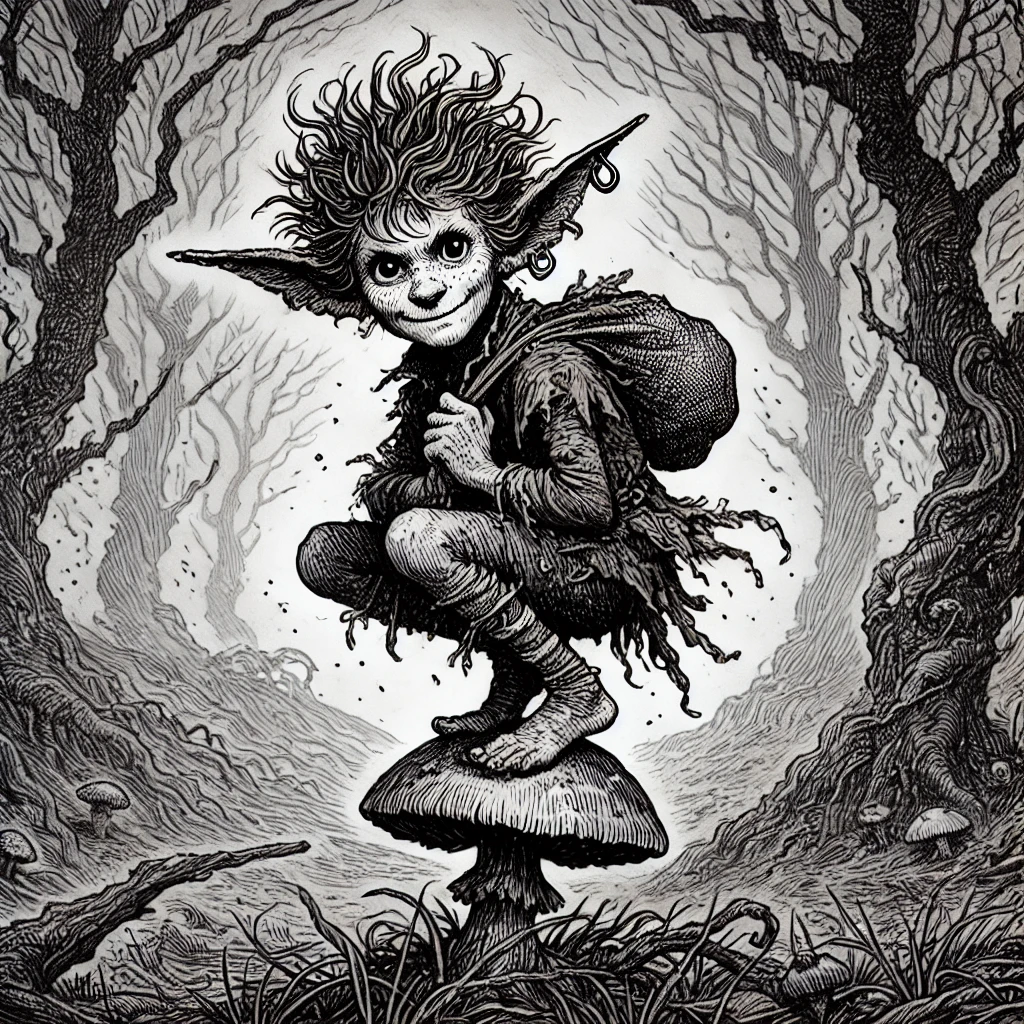
Pixie
I have never in all my travels experienced such difficulty as I did on the road from Bodmin to St. Austell. A journey of no more than a dozen miles took all of the day and much of the night, so that it was near midnight when I arrived at my destination, cold, wet, and exhausted upon a cold, wet, and exhausted horse. Upon hearing my tale, the locals at the inn chuckled and exchanged knowing glances, assuring me that I had been “pixy-led” until the little people tired of their sport. Had I taken one of several well-known precautions, they said, I might have been spared the ordeal, and spent the afternoon and evening snug in the inn, as they had clearly done themselves.
— William Stukeley, July 1719
Pixies, or piskies as they are sometimes called, are native to the south-western counties of Cornwall and Devon. They stand 9–12 inches (23–30 cm) tall with red hair, pointed ears, and turned-up noses. They love to play tricks on travelers, leading them astray and even directing them into bogs and other hazards. Their tricks may turn deadly if the victim is a poor sport. They have been known to steal horses and ride them to exhaustion. Another trick is to enchant a bag of dung or toadstools to look like gold and leave it for a mortal to find. The glamor ends as soon as the victim tries to spend the “treasure”.